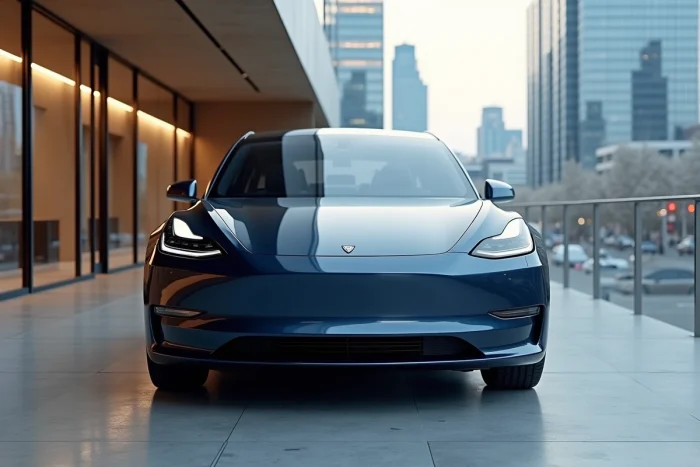
The European automotive market is undergoing a rapid adjustment period. Registrations of 100% electric vehicles are slowing down in several major markets, hybrids are regaining ground, and manufacturers are adapting their industrial plans at a pace that few observers had anticipated. What indicators should we monitor to understand where the auto sector is heading in 2025-2026?
Electric and Hybrid Vehicles in Europe: The Power Dynamics in Numbers
The data published by ACEA and IEA paints a more nuanced picture than the dominant narrative on electrification. The deceleration of BEV (100% battery electric vehicles) registrations is affecting markets considered pioneers: Germany, the United Kingdom, and the Nordic countries.
| Powertrain | Trend 2024-2025 | Concerned Markets |
|---|---|---|
| 100% Electric (BEV) | Deceleration, even decline | Germany, United Kingdom, Nordics |
| Plug-in Hybrid (PHEV) | Progression | France, Southern Europe |
| Non-Plug-in Hybrid | Marked progression | Most European markets |
| Pure Thermal | Structural decline | Entire EU |
What this table indicates: hybrids are capturing the demand that BEVs are not converting. Purchase price, perceived range, and the still uneven distribution of charging stations are hindering the shift to fully electric. Mainstream auto sites, focused on model launches, are less likely to report this structural shift. Following auto news on Je veux de l’info allows for cross-referencing these market data with manufacturer announcements.

Euro 7 Standards and CO2 Targets: What Changes for Catalogs
The gradual implementation of Euro 7 standards, combined with the tightening of CO2 targets per vehicle for fleets in 2025 and then 2030, is producing concrete effects on the supply.
Several manufacturers are already removing thermal models from their catalogs that would be too costly to bring into compliance. At the same time, the return of small low-displacement gasoline engines is accelerating to maintain affordable cars below emission thresholds.
This movement also affects sports ranges. High-power thermal models are gradually disappearing, replaced by hybrid or fully electric versions. Subaru’s strategy illustrates this sector hesitation: the Japanese manufacturer has announced it will reduce its investments in fully electric vehicles in favor of hybrids, believing that the transition will take longer than expected.
Stellantis and the Fastlane Plan
Stellantis is adapting its portfolio with the Fastlane plan. Fiat plans four new models at affordable prices by 2030, positioned in segments where regulatory pressure is the highest. The group is also preparing for social leasing 2026, with the launch set for July 16.
This program will specifically target home care workers, who will be able to access a used electric vehicle through a low-cost leasing option. Income caps, bonus amounts for low-income individuals, and specific aids for light commercial vehicles distinguish this program from traditional commercial offers.
Charging Stations: Price Discrepancies Impacting Adoption
The charging infrastructure remains a measurable barrier. Recent surveys show price discrepancies of nearly 500% for the same charge depending on the operator and the location of the station.
This pricing dispersion creates a budget uncertainty that buyers of thermal or hybrid vehicles do not experience. It partly explains why the progression of BEVs is slowing even as the supply of models expands.
- The price per kWh varies significantly between operators, with no clear visibility for users at the time of charging
- Fast chargers on highways display the highest rates, sometimes several times higher than urban stations
- Monthly subscriptions reduce the bill but add a layer of complexity to daily use
As long as this pricing opacity persists, the actual cost of using an electric vehicle remains difficult for individuals to anticipate.
New Releases 2026: Ferrari Luce and the Electric Premium Segment
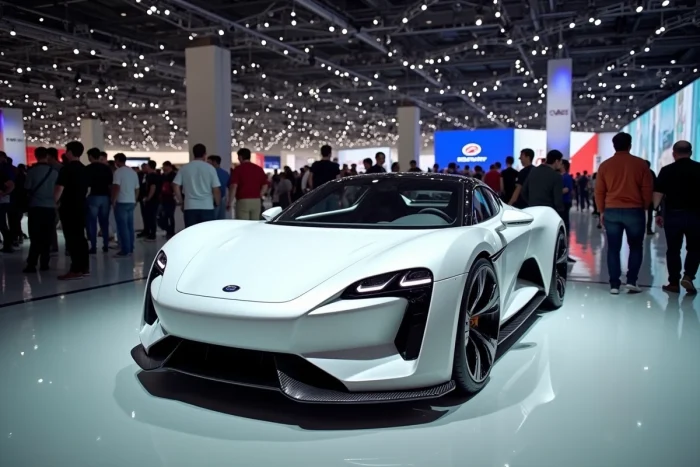
The news of upcoming launches confirms that the high-end market is accelerating its transition. Ferrari has unveiled the Luce, its first 100% electric model, a five-seat coupe boasting over 1,000 horsepower. The Maranello manufacturer has partnered with the design collective LoveFrom, founded by Jony Ive.
However, the reception of the model is divisive. The controversy is less about the powertrain than about the stylistic positioning and the expected price. The electric premium segment is testing the market’s limits of acceptability.
On the volume side, Citroën is preparing to bring back the 2 CV in electric form, while Škoda is positioning the Epiq as an accessible electric SUV. These two approaches (nostalgia and tight pricing) aim at buyers that premium sedans do not reach.
Porsche Pauses Production
A telling signal: Porsche has paused production of one of its best-selling electric models. Demand has not followed initial forecasts. This slowdown, observed in a manufacturer whose clientele can absorb a premium, confirms that the barrier to electric adoption goes beyond just the price issue.
The coming months will determine whether the shift towards hybrids is a temporary plateau or a lasting change in direction. The regulatory targets for 2030 remain in place, but the trajectory to achieve them will depend as much on charging infrastructure as on the willingness of manufacturers. The 2026 Paris Motor Show, scheduled from October 12 to 18 at Porte de Versailles, will be a key observation point to measure the gap between announcements and market reality.