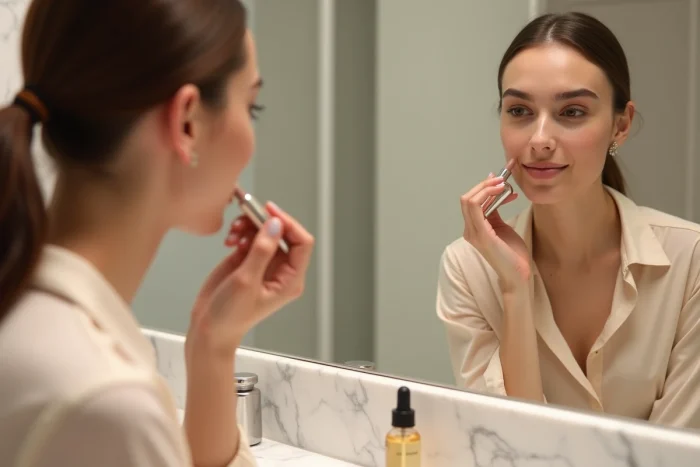
The online makeup market is home to dozens of brands competing on the same promises: low prices, fast delivery, and extensive catalogs. In this context, a store like Makeup Chic faces a question that few competing pages clearly address: how to simultaneously meet the expectations for healthier formulations, controlled budgets, simplified routines, and frictionless shopping experiences.
Consumers have changed their perspective. Price alone is no longer enough to trigger a purchase, nor is the depth of a catalog. The question remains whether a specialized player can truly deliver on all four promises at once.
Clean makeup and low prices: a rarely explained equation
Brands like Oh My Cream position their makeup offerings on the “clean” front for eyes, face, and lips. Generalists like Nocibé focus more on price, visible promotions, and fast delivery. Each camp defends one half of the equation, rarely both at the same time.
The problem lies in the formulation itself. A foundation or lipstick formulated without certain controversial ingredients generally costs more to produce. Offering such products at an accessible price means either reducing margins or limiting the depth of the catalog to concentrate volumes on a few key references.
Browsing the products offered by Makeup Chic, we see a selection that does not aim to cover all segments. This curation approach rather than accumulation could be a lever to maintain controlled prices on targeted ranges, even if feedback from the field varies on this point depending on product categories.

Daily beauty routine: what the catalog reveals about positioning
The notion of a quick daily routine has become a key purchasing criterion. Consumers are looking for versatile products (a tinted moisturizer that replaces foundation and day cream, a pigmented lip balm that can also be used on cheeks) rather than a multiplication of references.
A catalog oriented towards “routine” is recognized by several signals:
- The presence of multi-use products (face, lips, eyes) presented with suggestions for combined use rather than sold in isolation
- Product sheets that specify application time or the number of necessary steps, not just the list of ingredients
- Navigation by need (“natural look in five minutes,” “evening makeup”) rather than solely by technical category
A catalog structured by routine simplifies the purchasing decision. Stores that organize their products only by type (mascara, foundation, blush) force the customer to reconstruct their routine themselves, which increases the abandonment rate.
Online shopping experience: the details that separate a smooth store from a generic site
Nocibé and large brands have set the bar high on logistics: in-store pickup, express delivery, loyalty programs. For a smaller player, competing on these logistical aspects is rarely viable.
However, the fluidity of the shopping experience is not limited to delivery speed. It also involves the clarity of product information, the absence of intrusive pop-ups, the readability of compositions, and the consistency between the marketing promise and the actual content of the product sheet.
In this area, specialized stores have a structural advantage: fewer references to manage means more time to document each product. A sheet that clearly indicates the texture, coverage, suitable skin type, and notable ingredients reduces returns and disappointments.
What competing pages do not document
The majority of analyzed competing sites limit themselves to product lists with prices and visuals. Beauty advice exists, but on separate pages (blog, magazine) without direct links to the relevant product sheet. The bridge between advice and purchase is often absent.
Integrating usage advice directly on the product page (not in a distant blog article) changes the perception of value. The customer is not just looking for a mascara: she is looking for a mascara that meets her specific need (sensitive eyes, short lashes, long-lasting wear for an evening).

Makeup for parties and everyday looks: two uses, one catalog
Seasonality weighs heavily in online makeup. Searches around Christmas makeup, party looks, or intense eye looks explode every year-end. The rest of the time, demand focuses on natural, nude, and tinted care.
A viable catalog must cover these two temporalities without spreading itself too thin. Offering a festive palette in golden tones or a satin lipstick for the holidays only makes sense if these same products find everyday use. A copper eyeshadow worn as a wash for Christmas can serve as a subtle highlight the rest of the year.
Brands that multiply ephemeral collections create marketing urgency but also frustration when the product disappears. Conversely, a stable catalog with versatile shades (rosy nude, warm brown, plum) covers most occasions without artificial renewal.
Sensitive skin and makeup formulation: an angle still under-documented
Searches combining “makeup” and “sensitive skin” remain frequent, but the available online responses often limit themselves to generic advice. Few product sheets specify whether a formula is suitable for reactive skin, beyond the mention “dermatologically tested.”
- The presence or absence of fragrance in a foundation or mascara is a discriminating criterion for sensitive skin
- The texture (loose powder, cream compact, liquid formula) directly influences skin tolerance depending on skin type
- The certifications or labels displayed on the product sheet allow verification of “clean” claims beyond marketing rhetoric
Clearly displaying compositions and ingredient exclusions on each sheet represents a measurable competitive advantage. The available data does not allow us to conclude that Makeup Chic goes further than its competitors on this specific point, but there is space for anyone who takes it seriously.
The online makeup market remains fragmented between players who focus on volume and those who focus on curation. Balancing accessible prices, careful formulation, simplified routines, and clear shopping experiences requires trade-offs that most brands do not make visible. The difference lies less in the number of references than in how each product is presented, documented, and integrated into real usage.