In Lisbon, Augusta Street was built on the ruins of an earthquake, but every stone still obeys the rigorous order of the Marquis of Pombal. In Berlin, Friedrichstraße, once cut in two, still bears the scars of a vanished border on its asphalt, a remnant of a fractured past.
Some European streets have seen their names change more than fifteen times in a century, reflecting each political or social shift. Others escape urban logic, surviving outside the layout of official plans, protected by legal statuses inherited from bygone empires.
When European streets become living witnesses of history and culture
In every European historic center, the cobblestone streets reveal, to those who know how to observe, the layers of collective memory. In Paris, Le Marais and Montmartre blend architectural power with social richness. Le Marais features the Place des Vosges, Rue des Rosiers, Rue Vieille du Temple: discreet shopfronts, preserved facades, where history manifests itself without ever imposing. In Lisbon, Alfama and Bairro Alto tell centuries of cultural mixing through cobblestone alleys that wind between the hills.
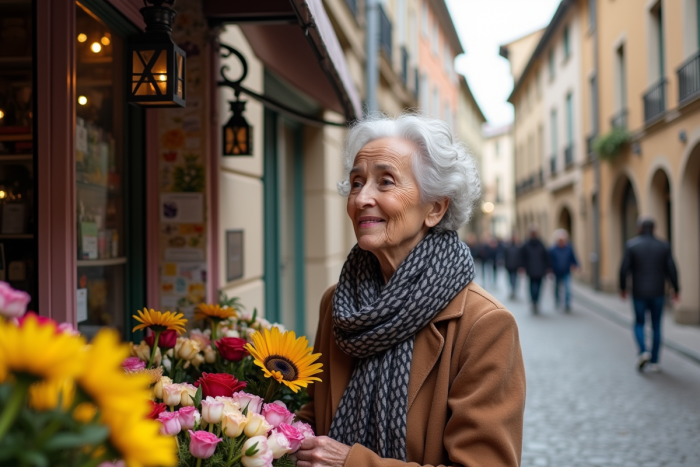
To grasp the unique atmosphere of these cities, one only needs to pause for a moment at their historic markets. These emblematic places, such as Striezelmarkt in Dresden, Naschmarkt in Vienna, or Victor Hugo market in Toulouse, perpetuate ancient traditions. People meet there to exchange, taste, and pass on. In Liège, the Batte market continually introduces visitors to Herve cheese or Liège waffles; in Bilbao, Mercado La Ribera invites you to taste Manchego cheese, pintxos, or pimientos de Gernika. From the old town of Plovdiv to Gdansk, Krakow, or Stockholm, each European capital or city shapes a unique identity, nourished by history and sharing.
Here are some examples of streets that carry the history of their city:
- The Rue d’Angleterre in Nice, now considered a safe neighborhood for visitors, has seen its image evolve over time, marking memories differently according to the eras.
- The arteries of Berlin, from Friedrichstraße to Unter den Linden, still display the traces of recent history, where the city was long divided and then reunified.
- In Paris, Rue des Rosiers recalls the centuries-old Jewish presence, while in Krakow, Rue Szeroka bears witness to the past wealth of the Jewish quarter of Kazimierz.
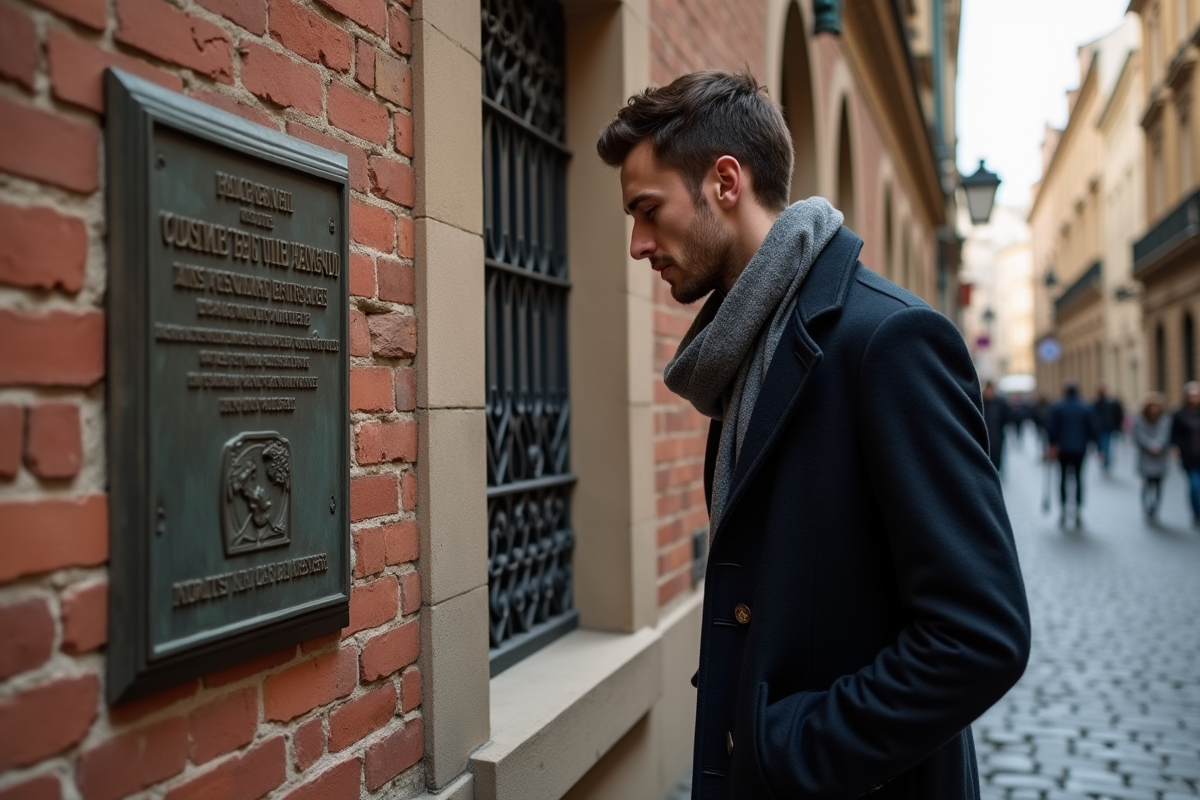
These streets are not just thoroughfares for cars and pedestrians. They are open-air narratives. They almost shape the character of those who linger there, anchoring the memories of locals and feeding the curiosity of those traversing Europe in search of authenticity. Walking on these cobblestones, reading the names on the plaques, inhaling the air of a market, is to touch the memory of the continent.
Which emblematic neighborhoods to explore for a journey into the heart of European heritage?
Some neighborhoods in Paris, Lisbon, Barcelona, or Rome concentrate an unparalleled density of history and culture. Le Marais in Paris runs through Place des Vosges, Rue des Rosiers, Rue Vieille du Temple: here, Jewish memory intertwines with classical elegance, while the cobblestones narrate the rise of the Parisian bourgeoisie. In Montmartre, Place du Tertre gathers artists and passersby under the peaceful shadow of Sacré-Cœur, recalling the bohemian spirit that permeates the neighborhood.
In Lisbon, Alfama unfolds between Rua da Judiaria, the majesty of Sé Cathedral, and the viewpoint of Miradouro de Santa Luzia. Not far away, Bairro Alto offers a relaxed and festive atmosphere, its narrow alleys adorned with colorful azulejos, where locals and travelers mingle.
Barcelona also stands out as a major stop: the Gothic Quarter showcases the cathedral, Plaça del Rei, and medieval alleys with walls steeped in memories. El Born, just steps away, brings together the Picasso Museum and the tranquility of Ciutadella Park, creating a permanent dialogue between culture and nature.
Rome offers its share of neighborhoods worth visiting: Trastevere, popular and vibrant, combines nightlife with discreet churches. The Monti district, with Via del Governo Vecchio or Basilica di Santa Maria Maggiore, reveals entire sections of the eternal city, between lively alleys and monuments steeped in history.
To better grasp the diversity of these neighborhoods, one only needs to observe the markets that punctuate their daily life. Here are some of these historic and vibrant markets:
- Striezelmarkt in Dresden, where the tradition of Christmas markets has endured for centuries
- Bat market in Liège, a must-visit for local products
- Victor Hugo market in Toulouse, a true culinary institution of the Southwest
- Hala Targowa in Krakow, where one discovers the flavors of Poland
- Mercado La Ribera in Bilbao, a temple of Basque cuisine and local products
Each of these neighborhoods and markets showcases, tastes, and feels what makes the uniqueness and richness of European cities. Wandering these streets, exploring these squares, is to connect with both history, everyday life, and the legacy of world heritage. Every detour holds its surprise, every street name an anecdote, every market an unexpected flavor. Urban Europe never fully reveals itself; it is tamed, step by step, cobblestone by cobblestone.