
The choice of an artistic training after the baccalaureate is no longer limited to fine arts or traditional applied arts. Post-bac creative pathways now cover a spectrum that ranges from game design to scenography, including cultural management and UX design. For a high school student whose background includes specialties in visual arts, cinema-audiovisual, or culture, the real challenge is to distinguish between programs that provide a recognized diploma and those that sell a promise without accreditation.
Recognition of diplomas in art schools: the criterion that brochures downplay
A national higher diploma in plastic expression (DNSEP) awarded by a regional or national school is recognized by the Ministry of Culture and confers a master’s degree. In contrast, many private schools issue RNCP titles whose level of recognition varies significantly.
We recommend checking three points before any enrollment: the ministerial visa (Culture or Higher Education), registration in the RNCP with the exact level of certification, and possible membership in the Conference of Grandes Écoles or the ANdEA (National Association of Higher Art Schools). Without these benchmarks, a bac+5 diploma may hold no value in the job market.
France has 14 national higher art schools spread across 9 cities, in addition to 36 regional schools funded by local authorities. This public network remains the most reliable foundation for a career in art, design, or visual communication. Creative high school students who are leaning towards schools dedicated to artistic professions benefit from systematically comparing the legal status of the institution with the nature of the title awarded.
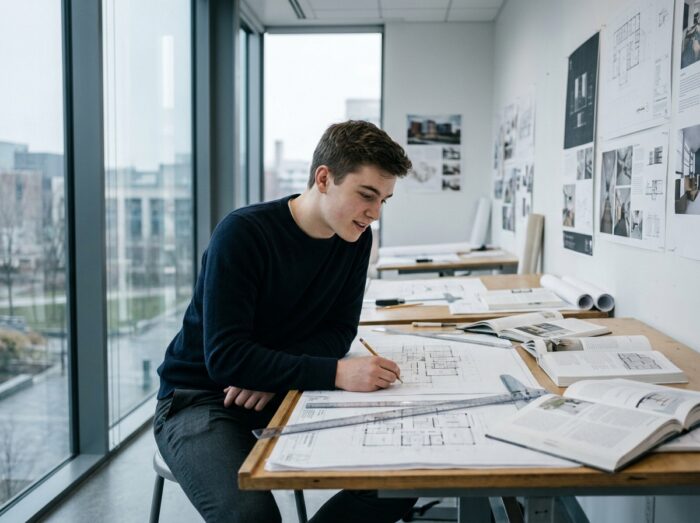
High school specialties and access to art studies after the bac
The choice of specialties in the first and final years directly affects eligibility for most selective artistic programs. Public art schools recruit through competitive exams, often after reviewing a personal artistic portfolio and a motivation interview. Having followed the visual arts specialty is not always mandatory, but it remains a strong signal for the juries.
For cinema-audiovisual pathways, the specialty of the same name in high school provides a technical culture (film analysis, shooting practice) that distinguishes applications. In contrast, design schools tend to favor profiles combining a scientific specialty (mathematics, digital) with documented personal artistic practice.
The case of DN MADE and DNSP
The national diploma in arts and design (DN MADE), accessible via Parcoursup, is the main pathway to bac+3 in applied arts. It replaces the former MANAA followed by a DMA or BTS. The mentions cover a wide range:
- Graphic design, digital, and animation, for profiles attracted to interface design or motion design
- Space and event, focused on scenography, interior architecture, and museography
- Materials and objects, which includes traditional arts professions (cabinetmaking, ceramics, jewelry) with a contemporary approach to product design
- Fashion and textiles, combining creation and industrialization
The DNSP (national higher professional diploma), awarded by conservatories and certain specialized schools, pertains to the performing arts: dance, circus, music. This bac+3 diploma confers the grade of license and opens up to specialized master’s degrees.
Professional integration: what has changed since the early 2020s
Public higher art schools have significantly strengthened their support systems for integration. Institutions such as ENSBA Lyon, ESAAA Annecy, ESAD Grenoble/Valence, and TALM now offer young graduate residencies lasting one to three years, with free workshops and professionalization seminars starting in the second year of the program.
This shift is not cosmetic. It responds to a recurring criticism: art schools trained artists without providing them with the tools to live off their practice. The seminars now cover copyright, artist taxation, and responses to calls for projects, skills that were previously acquired on the ground, often painfully.
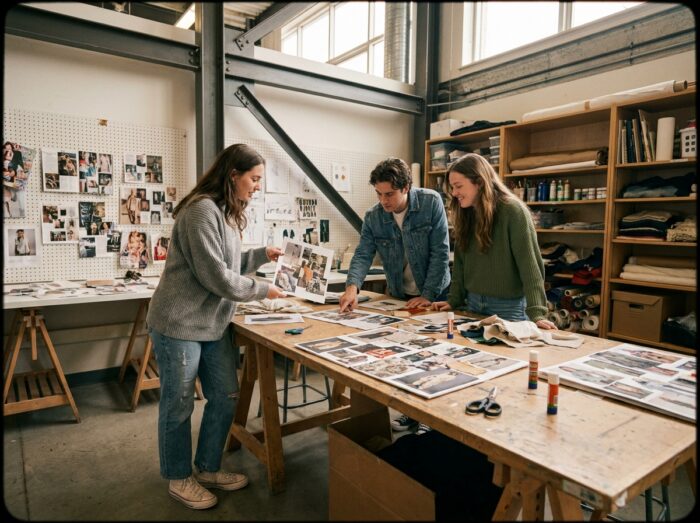
Expanded opportunities in hybrid professions
The job market for creative profiles is no longer limited to “artist or teacher.” UX design, game design, artistic direction in agencies, cultural mediation, or management of cultural projects absorb an increasing share of graduates. Schools that incorporate coding, digital prototyping, or project management into their curriculum place their students better than those that stick to an exclusively workshop model.
We observe that high school students who combine artistic training with technical skills (mastery of 3D software, programming knowledge, audiovisual culture) access positions where a purely plastician profile struggles to position itself. Technical versatility has become a more determining factor for employability than the reputation of the school.
Cost and funding of post-bac artistic training
Public regional and national art schools charge tuition fees aligned with those of universities, making them accessible to most families. Private schools, on the other hand, have fees that can amount to several thousand euros per year without any additional guarantee of placement.
Before committing to an expensive private program, we recommend comparing the insertion rate upon graduation (when the school publishes it), the average duration of job search for former graduates, and the proportion of graduates actually working in the targeted artistic or creative field.
- Check if the school is eligible for CROUS scholarships, which is only the case for institutions under supervision or contracted with the ministry
- Request the results of the 3-year insertion survey, mandatory for public schools
- Compare the total cost of the program (fees, materials, housing) with that of a DN MADE in a public high school, often more advantageous for an equivalent diploma
A well-chosen public program remains the best training/cost ratio for a creative high school student who does not have a family financial safety net. The prestige of a private school does not compensate for a training debt if the targeted profession pays modestly at the start of a career. It is better to invest in a solid portfolio and targeted internships than in high tuition fees.